Skip to content

geeky

๐Ÿ‘พ GRUB Invaders: Because Bootloaders Deserve to Have Fun Too

You know how you can make your bootloader sing a little tune?
Wellโ€ฆ what if instead of music, you could make it play Space Invaders?

Yes, thatโ€™s a real thing.
Itโ€™s called GRUB Invaders, and it runs before your operating system even wakes up.
Because who needs Linux when you can blast aliens straight from your BIOS screen? ๐Ÿš€


๐ŸŽถ From Tunes to Lasers

In a previous post โ€” โ€œResurrecting My Windows Partition After 4 Years ๐Ÿ–ฅ๏ธ๐ŸŽฎโ€ โ€”
I fell down a delightful rabbit hole while editing my GRUB configuration.
Thatโ€™s where I discovered GRUB_INIT_TUNE, spent hours turning my PC speaker into an 80s arcade machine, and learned far more about bootloader acoustics than anyone should. ๐Ÿ˜…

So naturally, the next logical step was obvious:
if GRUB can play music, surely it can play games too.
Enter: GRUB Invaders. ๐Ÿ‘พ๐Ÿ’ฅ


๐Ÿงฉ What the Heck Is GRUB Invaders?

grub-invaders is a multiboot-compliant kernel game โ€” basically, a program that GRUB can launch like itโ€™s an OS.
Except itโ€™s not Linux, not BSD, not anything remotely usefulโ€ฆ
itโ€™s a tiny Space Invaders clone that runs on bare metal.

To install it (on Ubuntu or Debian derivatives):

sudo apt install grub-invaders

Then, in GRUBโ€™s boot menu, itโ€™ll show up as GRUB Invaders.
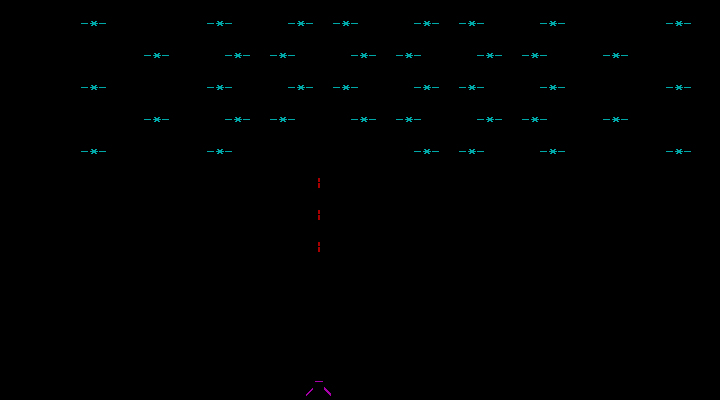
Pick it, hit Enter, and bam! โ€” no kernel, no systemd, just pew-pew-pew.
Your CPU becomes a glorified arcade cabinet. ๐Ÿ•น๏ธ

Image: https://libregamewiki.org/GRUB_Invaders

๐Ÿ› ๏ธ How It Works

Under the hood, GRUB Invaders is a multiboot kernel image (yep, same format as Linux).
That means GRUB can load it into memory, set up registers, and jump straight into its entry point.

Thereโ€™s no OS, no drivers โ€” just BIOS interrupts, VGA mode, and a lot of clever 8-bit trickery.
Basically: the game runs in real mode, paints directly to video memory, and uses the keyboard interrupt for controls.
Itโ€™s a beautiful reminder that once upon a time, you could build a whole game in a few kilobytes.


๐Ÿงฎ Technical Nostalgia

Installed size?

Installed-Size: 30
Size: 8726 bytes

Yes, you read that right: under 9 KB.
Thatโ€™s less than one PNG icon on your desktop.
Yet itโ€™s fully playable โ€” proof that programmers in the โ€™80s had sorcery weโ€™ve since forgotten. ๐Ÿง™โ€โ™‚๏ธ

The package is ancient but still maintained enough to live in the Ubuntu repositories:

Homepage: http://www.erikyyy.de/invaders/
Maintainer: Debian Games Team
Enhances: grub2-common

So you can still apt install it in 2025, and it just works.


๐Ÿง  Why Bother?

Because you can.

Because sometimes itโ€™s nice to remember that your bootloader isnโ€™t just a boring chunk of C code parsing configs.
Itโ€™s a tiny virtual machine, capable of loading kernels, playing music, and โ€” if youโ€™re feeling chaotic โ€” defending the Earth from pixelated aliens before breakfast. โ˜•

Itโ€™s also a wonderful conversation starter at tech meetups:

โ€œOh, my GRUB doesnโ€™t just boot Linux. It plays Space Invaders. What does yours do?โ€


โš™๏ธ A Note on Shenanigans

Donโ€™t worry โ€” GRUB Invaders doesnโ€™t modify your boot process or mess with your partitions.
Itโ€™s launched manually, like any other GRUB entry.
When youโ€™re done, reboot, and youโ€™re back to your normal OS.
Totally safe. (Mostly. Unless you lose track of time blasting aliens.)


๐Ÿ TL;DR

  • grub-invaders lets you play Space Invaders in GRUB.
  • Itโ€™s under 9 KB, runs without an OS, and is somehow still in Ubuntu repos.
  • Totally useless. Totally delightful.
  • Perfect for when you want to flex your inner 8-bit gremlin.
๐ŸŽต The Secret Soundtrack of GRUB: Making Your Bootloader Sing

So, you know that feeling when youโ€™re editing GRUB for the thousandth time, because dual-booting is apparently a lifestyle choice?
In a previous post โ€” Resurrecting My Windows Partition After 4 Years ๐Ÿ–ฅ๏ธ๐ŸŽฎ โ€” I was neck-deep in grub.cfg, poking at boot entries, fixing UUIDs, and generally performing a ritual worthy of system resurrection.

While I was at it, I decided to take a closer look at all those mysterious variables lurking in /etc/default/grub.
Thatโ€™s when I stumbled upon something… magical. โœจ


๐ŸŽถ GRUB_INIT_TUNE โ€” Your Bootloader Has a Voice

Hidden among all the serious-sounding options like GRUB_TIMEOUT and GRUB_CMDLINE_LINUX_DEFAULT sits this gem:

# Uncomment to get a beep at grub start
#GRUB_INIT_TUNE="480 440 1"

Wait, what? GRUB can beep?
Oh, not just beep. GRUB can play a tune. ๐ŸŽบ

Hereโ€™s how it actually works (per the GRUB manpage):

Format:

tempo freq duration [freq duration freq duration ...]
  • tempo โ€” The base time for all note durations, in beats per minute.
    • 60 BPM โ†’ 1 second per beat
    • 120 BPM โ†’ 0.5 seconds per beat
  • freq โ€” The note frequency in hertz.
    • 262 = Middle C, 0 = silence
  • duration โ€” Measured in โ€œbarsโ€ relative to the tempo.
    • With tempo 60, 1 = 1 second, 2 = 2 seconds, etc.

So 480 440 1 is basically GRUB saying โ€œHello, world!โ€ through your motherboard speaker: 0.25 seconds at 440 Hz, which is A4 in standard concert pitch as defined by ISO 16:1975.
And yes, this works even before your sound card drivers have loaded โ€” pure, raw, BIOS-level nostalgia.


๐Ÿง  From Beep to Bop

Naturally, I couldnโ€™t resist. One line turned into a small Python experiment, which turned into an audio preview tool, which turned intoโ€ฆ letโ€™s say, โ€œbootloader performance art.โ€

Want to make GRUB play a polska when your system starts?
You can. Itโ€™s just a matter of string length โ€” and a little bit of mischief. ๐Ÿ˜

Thereโ€™s technically no fixed โ€œmaximum sizeโ€ for GRUB_INIT_TUNE, but remember: the bootloader runs in a very limited environment. Push it too far, and your majestic overture becomes a segmentation fault sonata.

So maybe keep it under a few kilobytes unless you enjoy debugging hex dumps at 2 AM.


๐ŸŽผ How to Write a Tune That Wonโ€™t Make Your Laptop Cry

Practical rules of thumb (donโ€™t be that person):

  • Keep the inline tune under a few kilobytes if you want it to behave predictably.
  • Hundreds to a few thousands of notes is usually fine; tens of thousands is pushing luck.
  • Each numeric value (pitch or duration) must be โ‰ค 65535.
  • Very long tunes simply delay the menu โ€” thatโ€™s obnoxious for you and terrifying for anyone asking you for help.
    Keep tunes short and tasteful (or obnoxious on purpose).

๐ŸŽต Little Musical Grammar: Notes, Durations and Chords (Fake Ones)

Write notes as frequency numbers (Hz). Example: A4 = 440.

Prefer readable helpers: write a tiny script that converts D4 F#4 A4 into the numbers.

Example minimal tune:

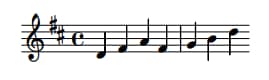
GRUB_INIT_TUNE="480 294 1 370 1 440 1 370 1 392 1 494 1 294 1"

Thatโ€™ll give you a jaunty, bouncy opener โ€” suitable for mild neighbour complaints. ๐Ÿ’ƒ๐ŸŽป

Chords? GRUB canโ€™t play them simultaneously โ€” but you can fake them by rapid time-multiplexing (cycling the chord notes quickly).
It sounds like a buzzing organ, not a symphony, but itโ€™s delightful in small doses.

Fun fact ๐Ÿ’พ: this time-multiplexing trick isnโ€™t new โ€” itโ€™s straight out of the 8-bit video game era.
Old sound chips (like those in the Commodore 64 and NES) used the same sleight of hand to make
a single channel pretend to play multiple notes at once.
If youโ€™ve ever heard a chiptune shimmer with impossible harmonies, thatโ€™s the same magic. โœจ๐ŸŽฎ


๐Ÿงฐ Tools I Like (and That You Secretly Want)

If youโ€™re not into manually counting numbers, do this:

Use a small composer script (I wrote one) that:

  • Accepts melodic notation like D4 F#4 A4 or C4+E4+G4 (chord syntax).
  • Can preview via your system audio (so you donโ€™t have to reboot to hear it).
  • Can install the result into /etc/default/grub and run update-grub (only as sudo).

Preview before you install. Always.
Your ears will tell you if your โ€œode to systemdโ€ is charming or actually offensive.

For chords, the script time-multiplexes: e.g. for a 500 ms chord and 15 ms slices,
it cycles the chord notes quickly so the ear blends them.
Itโ€™s not true polyphony, but itโ€™s a fun trick.

(If you want the full script I iterated on: drop me a comment. But it’s more fun to leave as an exercise to the reader.)


๐Ÿงฎ Limits, Memory, and โ€œHow Big Before It Breaks?โ€

Yes, my Red Team colleague will love this paragraph โ€” and no, Iโ€™m not going to hand over a checklist for breaking things.

Short answer: GRUB doesnโ€™t advertise a single fixed limit for GRUB_INIT_TUNE length.

Longer answer, responsibly phrased:

  • Numeric limits: per note pitch/duration โ‰ค 65535 (uint16_t).
  • Tempo: can go up to uint32_t.
  • Parser & memory: the tune is tokenized at boot, so parsing buffers and allocators impose practical limits.
    Expect a few kilobytes to be safe; hundreds of kilobytes is where things get flaky.
  • Usability: if your tune is measured in minutes, youโ€™ve already lost. Donโ€™t be that.

If you want to test where the parser chokes, do it in a disposable VM, never on production hardware.
If youโ€™re feeling brave, you can even audit the GRUB source for buffer sizes in your specific version. ๐Ÿงฉ


โš™๏ธ How to Make It Sing

Edit /etc/default/grub and add a line like this:

GRUB_INIT_TUNE="480 440 1 494 1 523 1  587 1  659 3"

Then rebuild your config:

sudo update-grub

Reboot, and bask in the glory of your new startup sound.
Your BIOS will literally play you in. ๐ŸŽถ


๐Ÿ’ก Final Thoughts

GRUB_INIT_TUNE is the operating-system equivalent of a ringtone for your toaster:
ridiculously low fidelity, disproportionately satisfying,
and a perfect tiny place to inject personality into an otherwise beige boot.

Use it for a smile, not for sabotage.

And just when I thought Iโ€™d been all clever reverse-engineering GRUB beeps myselfโ€ฆ
I discovered that someone already built a web-based GRUB tune tester!
๐Ÿ‘‰ https://breadmaker.github.io/grub-tune-tester/

Yes, you can compose and preview tunes right in your browser โ€”
no need to sacrifice your system to the gods of early boot audio.
Itโ€™s surprisingly slick.

Even better, thereโ€™s a small but lively community posting their GRUB masterpieces on Reddit and other forums.
From Mario theme beeps to Doom startup riffs, thereโ€™s something both geeky and glorious about it.
Youโ€™ll find everything from tasteful minimalist dings to full-on โ€œsomeone please stop themโ€ anthems. ๐ŸŽฎ๐ŸŽถ

Boot loud, boot proud โ€” but please boot considerate. ๐Ÿ˜„๐ŸŽป๐Ÿ’ป

Happy Tau Day!

De keuze voor ฯ€ (3,14โ€ฆ) is eigenlijk een historische vergissing. De waarde is wel correct, maar in zowat alle formules wordt 2ฯ€ (6,28โ€ฆ) gebruikt. Een aantal wiskundige geeks hebben beslist om dit vandaag (6/28 in Amerikaanders notatie) even onder de aandacht te brengen.

Meer info op tauday.com.

Happy Half Tau Day!

Happy Pi Half Tau Day!
Vandaag is het 3-14, in de Amerikaanders notatie. 3,14โ€ฆ is ook de waarde van ฯ€ (pi), ofwel de helft van ฯ„ (tau).
Huh? Waarom zou je dat vieren? Meer daarover op Tau Day! Nog effe wachten dusโ€ฆ ๐Ÿ˜‰