Skip to content

nyckelharpa

🎻 Spring Tunes: Three Inspiring Music Courses I Attended This Season

This spring was filled with music, learning, and connection. I had the opportunity to participate in three wonderful music courses, each offering something uniqueβ€”new styles, deeper technique, and a strong sense of community. Here is a look back at these inspiring experiences.


🎢 1. Fiddlers on the Move – Ghent (5–9 March)
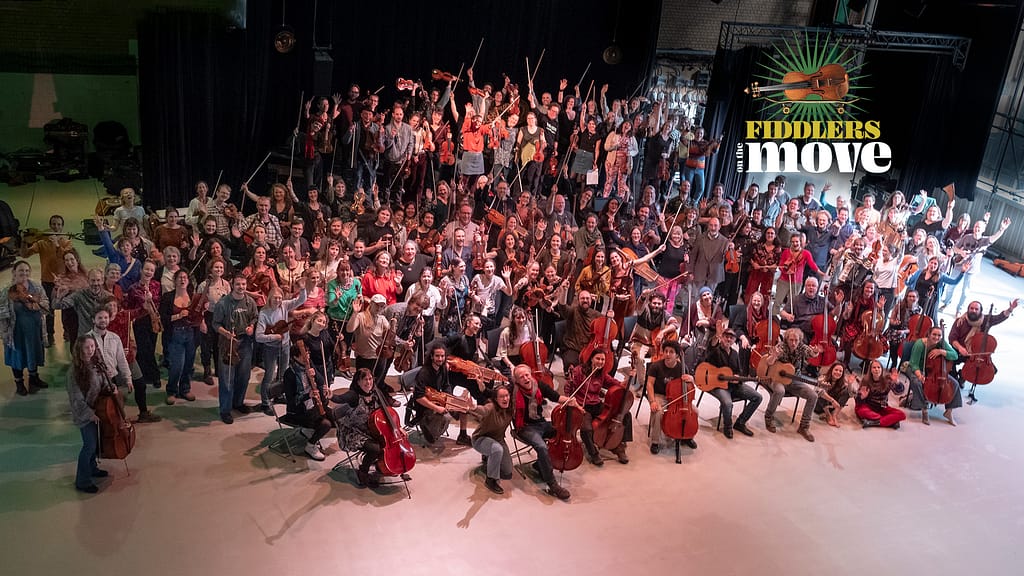
Photo: Filip Verpoest

In early March, I joined Fiddlers on the Move in Ghent, a five-day course packed with workshops led by musicians from all over the world. Although I play the nyckelharpa, I deliberately chose workshops that were not nyckelharpa-specific. This gave me the challenge and joy of translating techniques from other string traditions to my instrument.

Here is a glimpse of the week:

  • Wednesday: Fiddle singing with Laura Cortese – singing while playing was new for me, and surprisingly fun.
  • Thursday: Klezmer violin / Fiddlers down the roof with Amit Weisberger – beautiful melodies and ornamentation with plenty of character.
  • Friday: Arabic music with Layth Sidiq – an introduction to maqams and rhythmic patterns that stretched my ears in the best way.
  • Saturday: Swedish violin jamsession classics with Mia Marine – a familiar style, but always a joy with Mia’s energy and musicality.
  • Sunday: Live looping strings with Joris Vanvinckenroye – playful creativity with loops, layering, and rhythm.

Each day brought something different, and I came home with a head full of ideas and melodies to explore further.


πŸͺ— 2. Workshopweekend Stichting Draailier & Doedelzak – Sint-Michielsgestel, NL (18–21 April)
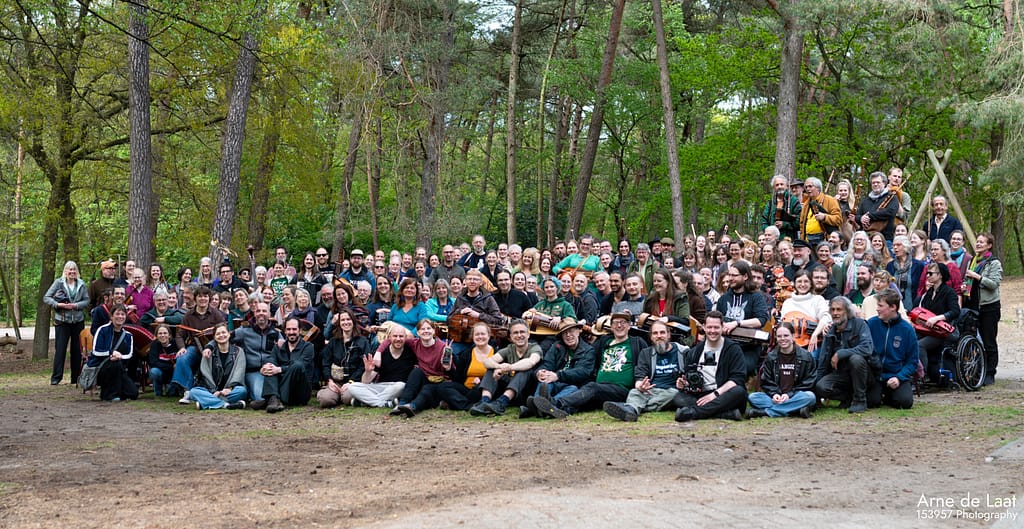
Photo: Arne de Laat

In mid-April, I traveled to Sint-Michielsgestel in the Netherlands for the annual Workshopweekend organized by Stichting Draailier & Doedelzak. This year marked the foundation’s 40th anniversary, and the event was extended to four days, from Friday evening to Monday afternoon, at the beautiful location of De Zonnewende.

I joined the nyckelharpa workshop with Rasmus Brinck. One of the central themes we explored was the connection between playing and dancing polskaβ€”a topic close to my heart. I consider myself a dancer first and a musician second, so it was especially meaningful to deepen the musical understanding of how movement and melody shape one another.

The weekend offered a rich variety of other workshops as well, including hurdy-gurdy, bagpipes, diatonic accordion, singing, and ensemble playing. As always, the atmosphere was warm and welcoming. With structured workshops during the day and informal jam sessions, concerts, and bals in the evenings, it was a perfect blend of learning and celebration.


πŸ‡ΈπŸ‡ͺ 3. Swedish Music for Strings – Ronse (2–4 May)

At the beginning of May, I took part in a three-day course in Ronse dedicated to Swedish string music. Although we could arrive on 1 May, teaching started the next day. The course was led by David Eriksson and organized by Amate Galli. About 20 musicians participatedβ€”two violinists, one cellist, and the rest of us on nyckelharpa.

The focus was on capturing the subtle groove and phrasing that make Swedish folk music so distinctive. It was a joy to be surrounded by such a rich soundscape and to play in harmony with others who share the same passion. The music stayed with me long after the course ended.


✨ Final Thoughts

Each of these courses gave me something different: new musical perspectives, renewed technical focus, and most importantly, the joy of making music with others. I am deeply grateful to all the teachers, organizers, and fellow participants who made these experiences so rewarding. I am already looking forward to the next musical adventure!

Jag lΓ€r mig svenska πŸ‡ΈπŸ‡ͺ

Jag brukade skriva pΓ₯ den hΓ€r bloggen pΓ₯ nederlΓ€ndska. Nu Γ€r det mest pΓ₯ engelska, men undantagsvis Γ€r det hΓ€r blogginlΓ€gget pΓ₯ svenska.

I september 2020 bΓΆrjade jag lΓ€ra mig svenska pΓ₯ kvΓ€llsskolan i Aalst. VarfΓΆr? Det finns flera anledningar:

  • Jag spelar nyckelharpa, ett typiskt svenskt musikinstrument. Jag gΓ₯r pΓ₯ kurser hemma och utomlands, ofta frΓ₯n svenska lΓ€rare. Det var sΓ₯ jag lΓ€rde kΓ€nna mΓ€nniskor i Sverige och dΓ₯ Γ€r det bra att prata lite svenska fΓΆr att hΓ₯lla kontakten online.
  • NΓ€r man slΓ₯r upp nΓ₯got pΓ₯ nΓ€tet om nyckelharpa Γ€r det ofta pΓ₯ svenska. Jag har ocksΓ₯ en underbar bok “Nyckelharpan – Ett unikt svenskt kulturarv” av EsbjΓΆrn Hogmark och jag vill kunna lΓ€sa den och inte bara titta pΓ₯ bilderna.
  • Jag tycker att Sverige Γ€r ett vackert land som jag kanske vill besΓΆka nΓ₯gon gΓ₯ng. Norge ocksΓ₯, och dΓ€r talar man en mΓ€rklig dialekt av svenska. πŸ˜›
  • Jag vill gΓ₯ en kurs pΓ₯ Eric SahlstrΓΆm Institutet i Tobo nΓ₯gon gΓ₯ng. DΓ₯ skulle det vara bra att fΓΆrstΓ₯ lΓ€rarna pΓ₯ deras eget sprΓ₯k.
  • Jag gillar sprΓ₯k och sprΓ₯kinlΓ€rning! Det hΓ₯ller min hjΓ€rna frΓ€sch och frisk. πŸ˜€

And if you didn’t understand anything: there’s always Google Translate!

Printing multiple PDF files from console with lp

Recently I wanted to print some PDF files containing sheet music. The tedious way to do that, would be to open them one by one in Evince and press the print button. Surely there must be a more efficient way to do that?

$ ls -l --human-readable *.pdf
-r--r--r-- 1 amedee amedee 217K apr 15  2020 'Arthur original.pdf'
-r--r--r-- 1 amedee amedee 197K apr 13  2020 'Canal en octobre.pdf'
-r--r--r-- 1 amedee amedee  14K apr 13  2020  DenAndro.pdf
-r--r--r-- 1 amedee amedee  42K apr 14  2020 'Doedel you do.pdf'
-r--r--r-- 1 amedee amedee  57K apr 13  2020  Flatworld.pdf
-r--r--r-- 1 amedee amedee  35K apr 16  2020 'Jump at the sun.pdf'
-r--r--r-- 1 amedee amedee 444K jun 19  2016 'Kadril Van Mechelen.pdf'
-r--r--r-- 1 amedee amedee  15K apr 13  2020  La-gavre.pdf
-r--r--r-- 1 amedee amedee  47K apr 13  2020 'Le petit dΓ©jeuner.pdf'
-r--r--r-- 1 amedee amedee 109K apr 13  2020  LesChaminoux__2016_04_24.cached.pdf
-r--r--r-- 1 amedee amedee 368K apr 13  2020 'Mazurka It.pdf'
-r--r--r-- 1 amedee amedee 591K apr 13  2020 'Narrendans uit Mater.pdf'
-r--r--r-- 1 amedee amedee 454K apr 13  2020 'Neverending jig.pdf'
-r--r--r-- 1 amedee amedee 1,1M apr 14  2020 'Red scissors.pdf'
-r--r--r-- 1 amedee amedee  35K apr 13  2020  Scottish-Γ -VirmouxSOL.pdf
-r--r--r-- 1 amedee amedee  76K apr 14  2020 'Tarantella Napolitana meest gespeelde versie.pdf'
-r--r--r-- 1 amedee amedee 198K apr 15  2020 'Zot kieken!.pdf'

There are 2 console commands for printing: lp and lpr. One comes from grandpa System V, the other from grandpa BSD, and both are included in CUPS. The nice thing about these commands is that they know how to interpret PostScript and PDF files. So this is going to be easy: just cd into the directory with the PDF files and print them all:

$ lp *.pdf
lp: Error - No default destination.

Oops. A quick Google search of this error message tells me that I don’t have a default printer.

Configuring a default printer

First I use lpstat to find all current printers:

$ lpstat -p -d
printer HP_OfficeJet_Pro_9010_NETWORK is idle.  enabled since za 12 mrt 2022 00:00:28
printer HP_OfficeJet_Pro_9010_USB is idle.  enabled since za 12 mrt 2022 00:00:17
no system default destination

I have a HP OfficeJet Pro 9012e printer, which Ubuntu recognizes as a 9010 series. Close enough. It’s connected over network and USB. I’m setting the network connection as default with lpoptions:

$ lpoptions -d $(lpstat -p -d | head --lines=1 | cut --delimiter=' ' --fields=2)
copies=1 device-uri=hp:/net/HP_OfficeJet_Pro_9010_series?ip=192.168.1.9 finishings=3 job-cancel-after=10800 job-hold-until=no-hold job-priority=50 job-sheets=none,none marker-change-time=0 media=iso_a4_210x297mm number-up=1 output-bin=face-down print-color-mode=color printer-commands=none printer-info printer-is-accepting-jobs=true printer-is-shared=true printer-is-temporary=false printer-location printer-make-and-model='HP Officejet Pro 9010 Series, hpcups 3.22.2' printer-state=3 printer-state-change-time=1649175159 printer-state-reasons=none printer-type=4124 printer-uri-supported=ipp://localhost/printers/HP_OfficeJet_Pro_9010_NETWORK sides=one-sided

I can then use lpq to verify that the default printer is ready:

$ lpq
HP_OfficeJet_Pro_9010_NETWORK is ready
no entries

Printing multiple files from console

I found that if I naively do lp *.pdf, then only the last file will be printed. That’s unexpected, and I can’t be bothered to find out why. So I just use ls and feed that to a while-loop. It’s quick and dirty, and using find+xargs would probably be better if there are “special” characters, but that’s not the case here.

There’s one caveat: when the PDF files are printed one by one, then the first page will be at the bottom of the paper stack, so I need to print them in reverse order.

$ ls --reverse *.pdf | while read f; do lp "$f"; done

With that command I got 17 print jobs in the printer queue, one for each file.

Now that I know how to print from console, I’ll probably do that more often. The man page of lp describes many useful printing options, like printing double sided:

$ lp -o media=a4 -o sides=two-sided-long-edge filename

Jag lΓ€r mig spela nyckelharpa

In 2016 I did something unexpected: I picked up a nyckelharpa for the very first time.

Jag hade aldrig spelat ett instrument “pΓ₯ riktigt” tidigare. Visst, jag spelade blockflΓΆjt i skolan – men jag var usel pΓ₯ det och hatade varje minut. So when I started learning nyckelharpa, it was a fresh beginning, a clean slate.

VarfΓΆr nyckelharpa?

One of the biggest reasons I got interested in the nyckelharpa is because I love to dance – especially balfolk, and even more so the Swedish polska. Det bΓΆrjade alltsΓ₯ med dansen. Jag lyssnade pΓ₯ mycket polska, och snart mΓ€rkte jag att mΓ₯nga av mina favoritlΓ₯tar spelades pΓ₯ nyckelharpa. Before I knew it, I wanted to try playing them myself.

Vad Γ€r en nyckelharpa?

A nyckelharpa is a traditional Swedish keyed fiddle. It has strings that you play with a bow, and instead of pressing the strings directly, you use wooden keys that stop the string at the correct pitch. Det ger en vΓ€ldigt speciell klang – varm, vibrerande och nΓ€stan magisk. Jag blev fΓΆrΓ€lskad i ljudet direkt.

Mina fΓΆrsta steg

Jag bΓΆrjade ta lektioner pΓ₯ musikskolan i Schoten, Belgien, dΓ€r min lΓ€rare Γ€r Ann Heynen. Sedan dess har jag deltagit i mΓ₯nga helgkurser och workshops i Belgien, Tyskland, NederlΓ€nderna och Storbritannien.
(Jag har inte varit i Sverige fΓΆr kurser – Γ€nnu! Men det finns pΓ₯ min ΓΆnskelista.)

Det var dΓ€r jag fick lΓ€ra mig av nΓ₯gra av de mest inspirerande spelmΓ€n och -kvinnor jag nΓ₯gonsin trΓ€ffat:
Jule Bauer, Magnus HolmstrΓΆm, Emilia Amper, Marco Ambrosini, Didier FranΓ§ois, Josefina Paulson, Vicki Swan, David Eriksson, Olena Yeremenko, BjΓΆrn Kaidel, Olov Johansson, ElΓ©onore Billy, Johannes Mayr, Johan LΓ₯ng, Alban Faust, Koen Vanmeerbeek, Eveline d’Hanens – och sΓ€kert mΓ₯nga fler fantastiska musiker jag glΓΆmmer just nu.

Under kurserna har jag ocksΓ₯ fΓ₯tt mΓ₯nga nya bekanta – och till och med riktiga vΓ€nner – frΓ₯n hela Europa.
We share the same passion for music, dancing, and culture, and it is amazing how the nyckelharpa can bring people together across borders.

FrΓ₯n hyra till egen nyckelharpa

Like many beginners, I started by renting an instrument. Men i 2019 kΓ€nde jag att det var dags att ta nΓ€sta steg, och jag bestΓ€llde min egen nyckelharpa frΓ₯n Jean-Claude Condi, en lutier i Mirecourt, Frankrike – ett historiskt centrum fΓΆr instrumentbyggare.

TyvΓ€rr slog pandemin till strax efter, och det drΓΆjde Γ€nda till augusti 2021 innan jag kunde Γ₯ka till Mirecourt och Γ€ntligen hΓ€mta min nyckelharpa. It was worth the wait.

En resa i bΓ₯de musik och sprΓ₯k

Att lΓ€ra mig spela nyckelharpa vΓ€ckte ocksΓ₯ mitt intresse fΓΆr svensk kultur. I kept hearing Swedish in the songs, and in 2020, I finally decided to start learning the language.
Jag bΓΆrjade lΓ€sa svenska pΓ₯ kvΓ€llsskola under lΓ€sΓ₯ret, och under loven fortsatte jag att ΓΆva med Duolingo. Sedan dess har jag fΓΆrsΓΆkt kombinera mina tvΓ₯ passioner: sprΓ₯ket och musiken.

Jag lyssnar ofta pΓ₯ svenska lΓ₯tar, spelar visor och folkmelodier, och ibland fΓΆrsΓΆker jag sjunga med. It is not only a way to practice, it is also incredibly rewarding.

Spela fΓΆr dans

One of my goals is to be able to play well enough that others can dance to my music – just like I love dancing to other people’s tunes.
Det Γ€r inte lΓ€tt, fΓΆr nΓ€r jag har lΓ€rt mig en lΓ₯t utantill, har jag redan glΓΆmt hur den fΓΆrra gick… Men jag fortsΓ€tter ΓΆva. En dag, sΓ₯!

Vad hΓ€nder hΓ€rnΓ€st?

Mitt mΓ₯l Γ€r att en dag spela tillsammans med andra pΓ₯ en riktig spelmansstΓ€mma i Sverige – och kanske Γ€ntligen ta en kurs pΓ₯ plats i Sverige ocksΓ₯.
Men fram till dess fortsΓ€tter jag att ΓΆva, att lΓ€ra mig, och att njuta av varje ton.

Jag lΓ€r mig spela nyckelharpa. Och jag lΓ€r mig svenska. TvΓ₯ passioner, ett hjΓ€rta. ❀️


🎢 Vill du ocksΓ₯ bΓΆrja?

Γ„r du nyfiken pΓ₯ nyckelharpa? Eller kanske du dansar balfolk och vill kunna spela sjΓ€lv?
Do not wait as long as I did β€” rent an instrument, find a workshop, or try your first tune today.
And if you are already playing: hΓΆr gΓ€rna av dig! Let us jam, dance, or just talk nyckelharpa.